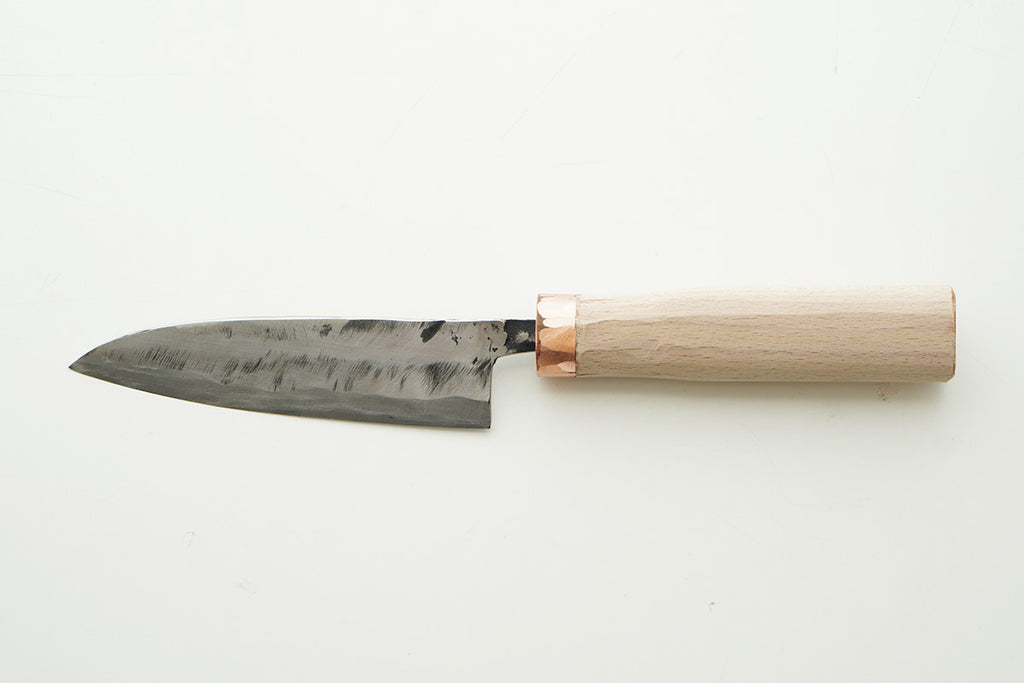
高橋鍛冶屋 | 出刃包丁(中型)
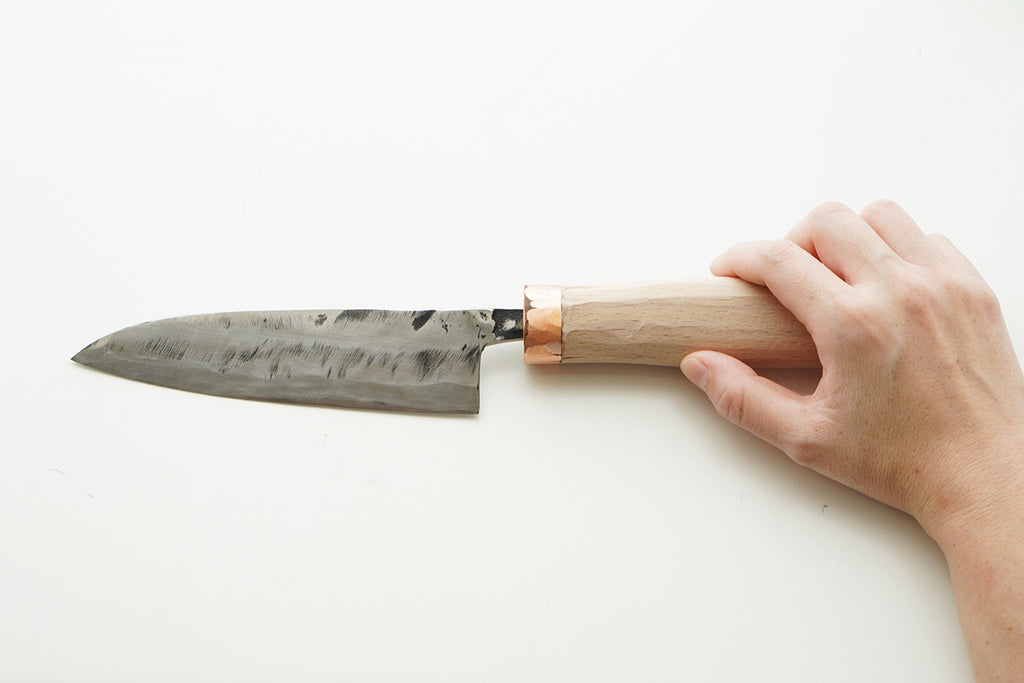
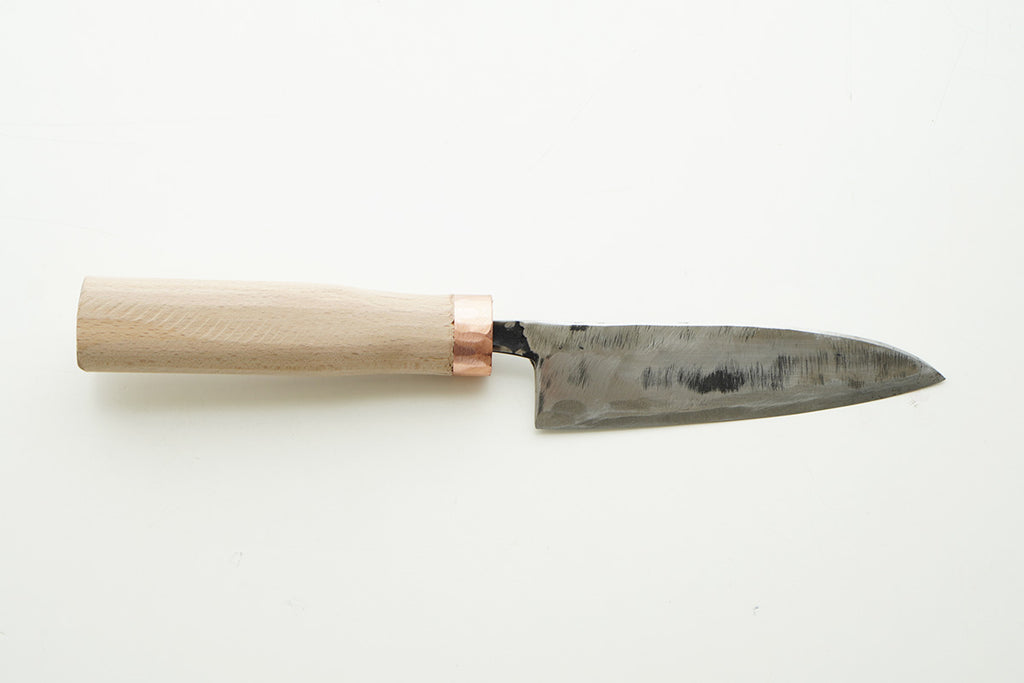
高橋鍛冶屋
Takahashi Kajiya | Deba knife (medium size)
在庫数: 在庫なし[出荷予定日]
Ships in approximately 2-3 weeks (on backorder) *We will contact you if there is a delay.

Hand-forged Deba Knife (Medium)
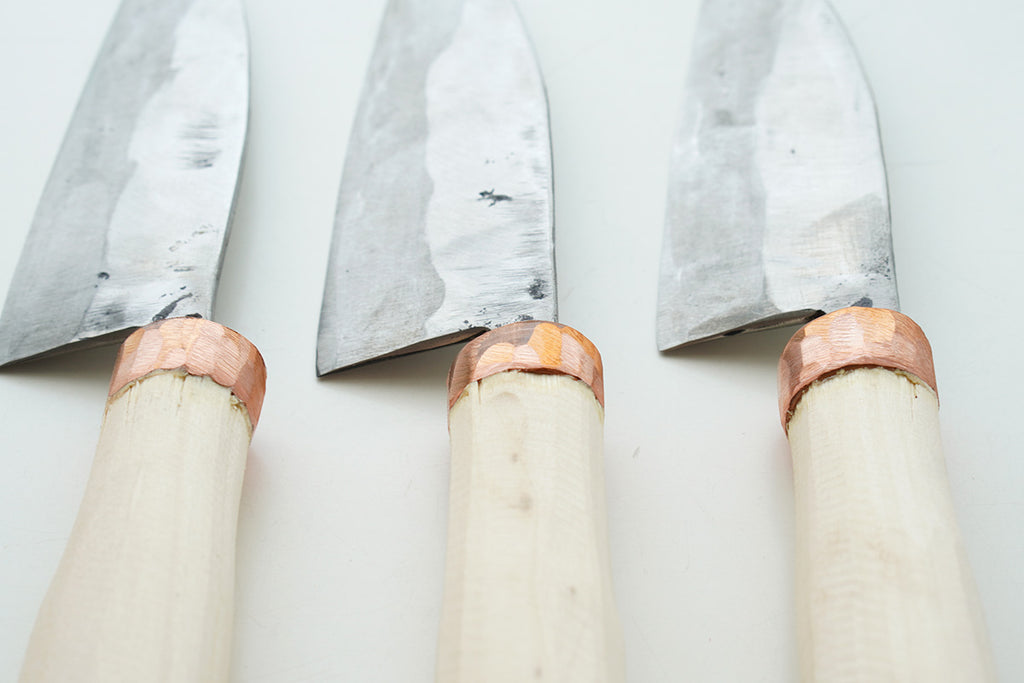
This is a "Deba Knife (Medium)" from Takahashi Kajiya, which has a workshop in Izumo City, Shimane Prefecture.The Izumo region is known as an iron-producing area, where Tatara ironmaking has flourished since ancient times, and it is also the origin of the "Yamata no Orochi" legend. Here, blacksmithing has been passed down through generations. Mr. Tsutomu Takahashi, the fourth generation of Takahashi Kajiya, continues to preserve the traditional forging method of "hot forging and hammering to temper," finishing each knife by hand.
A particularly distinctive technique is "wakashi," which has been passed down in the Izumo region since ancient times.
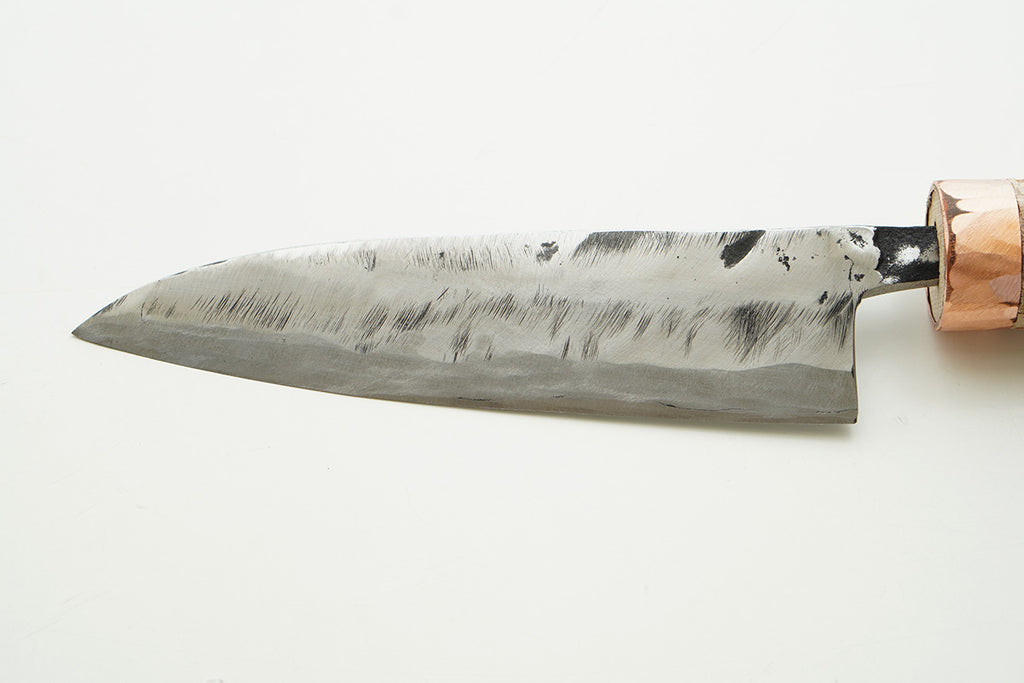
"Wakashi" is the same method as making Japanese swords, where steel and iron are layered and hammered together at high temperatures to join them. "Wakashi" relies entirely on the craftsman's experience, and it is said that managing the heating temperature and the force of hammering is very difficult. If the temperature is too high, the steel will melt; if the striking force is too weak, it will peel off; and if too much force is applied, it will stick too much. It is a very delicate and time-consuming process that can only be judged by sight. Currently, Takahashi Kajiya is the only one in Shimane that can use this technique, and there are very few nationwide.
The thick blade, forged by skilled hands, can powerfully cut through fish bones and flesh, smoothly slicing through even hard parts without resistance. It is a reliable knife for all aspects of fish preparation, such as filleting horse mackerel and sea bream, removing small bones from horse mackerel, and preparing squid and octopus.
The sturdy, thick blade provides a sense of security even when hitting bones, allowing for stable preparation. The moderate weight of the knife transmits its heft to your hand, allowing you to apply force effortlessly. It is a reliable deba knife that fully serves its purpose from fish preparation to slicing.
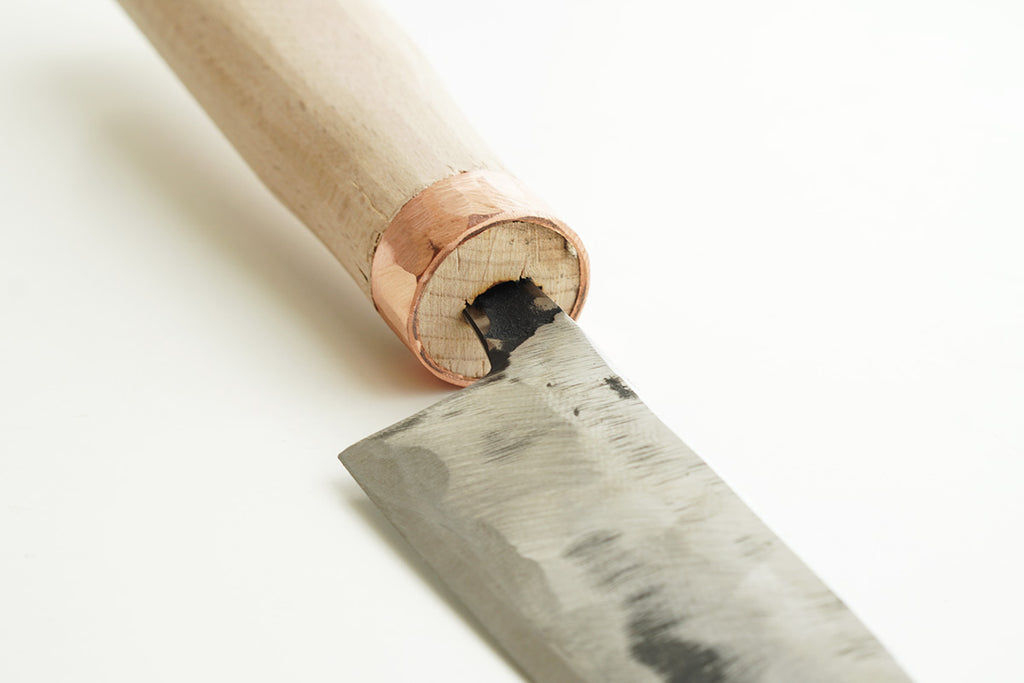
The steel extends securely to the base of the handle, ensuring long-lasting use.
Knife sharpening and handle replacement are provided free of charge, so even those who find maintenance difficult can use it with peace of mind. (Shipping costs are borne by the customer)
【Product Name】Deba Knife (Medium)
【Size (approx.)】Total length 305mm (blade length approx. 150mm)
【Weight (approx.)】216g
【Materials】Blade: Steel, Iron; Handle: Hou wood (unfinished), Copper
【Country of Origin】Japan
【Remarks】Knife sharpening and handle replacement are provided free of charge. (Shipping costs are borne by the customer)
●Before Purchase
・As each item is handmade, there may be slight individual differences in size and shape.
・As natural wood is used, there may be differences in grain and color.
・The blade and handle insert may be off-center, or there may be gaps between the copper and the handle.
・Gaps or wood shavings may be visible at the joint between the copper and the handle.
Please understand the above before purchasing.
●Usage Precautions
・Always thaw frozen foods before cutting. Cutting semi-frozen food may cause chipping of the blade.
・After use, wash with water and dry thoroughly with a dry cloth or similar. Always store with the blade tip facing down.
・Do not use a dishwasher or dryer. This may damage the handle.
 Takahashi Kajiya has a workshop in Izumo City, Shimane Prefecture. Blacksmith Tsutomu Takahashi was born into a family of blacksmiths dating back to the Meiji era and, as the fourth generation, he continues the tradition and techniques of knife making while preserving them. Committed to hand forging, the knives are carefully finished while facing the materials, naturally fitting into the user's life and being cherished by many as lifelong items that can be used for a long time.
Click here for a list of Takahashi Kajiya's works
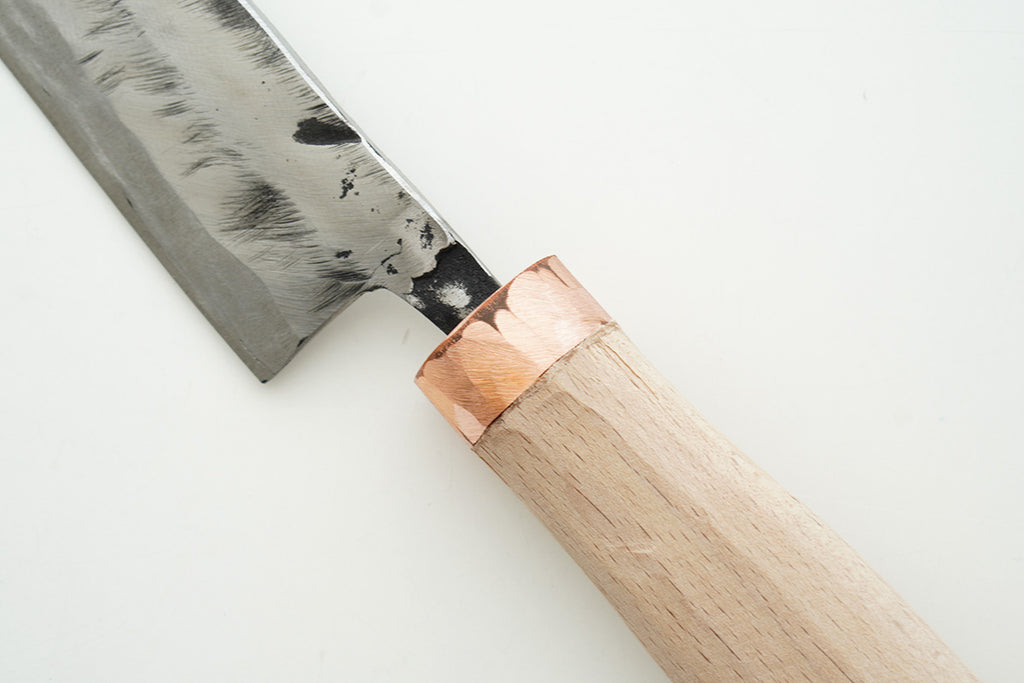
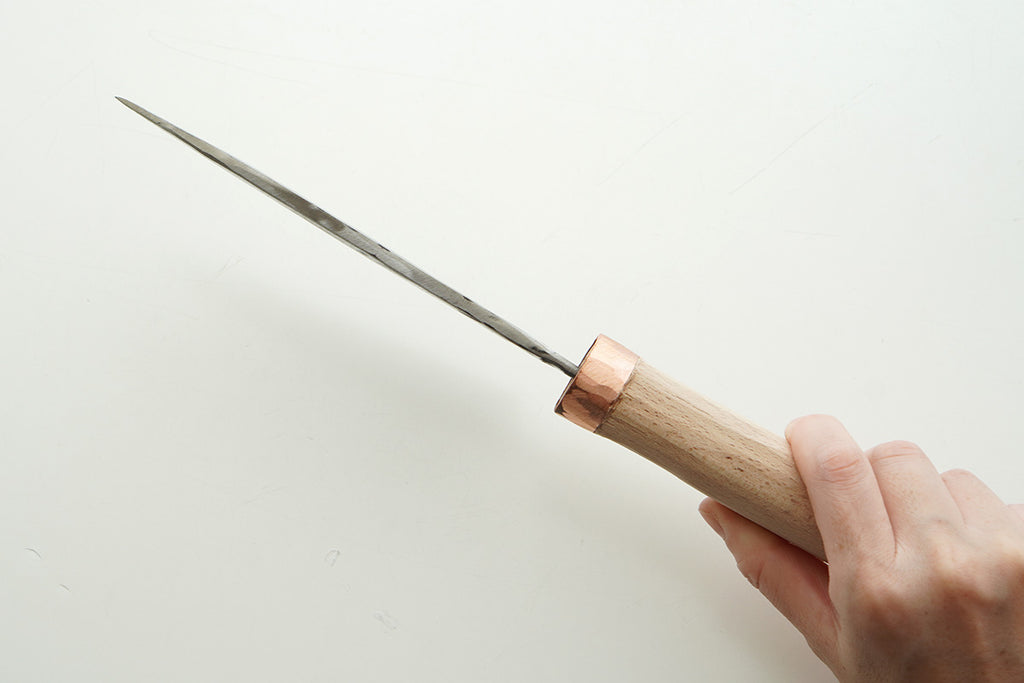
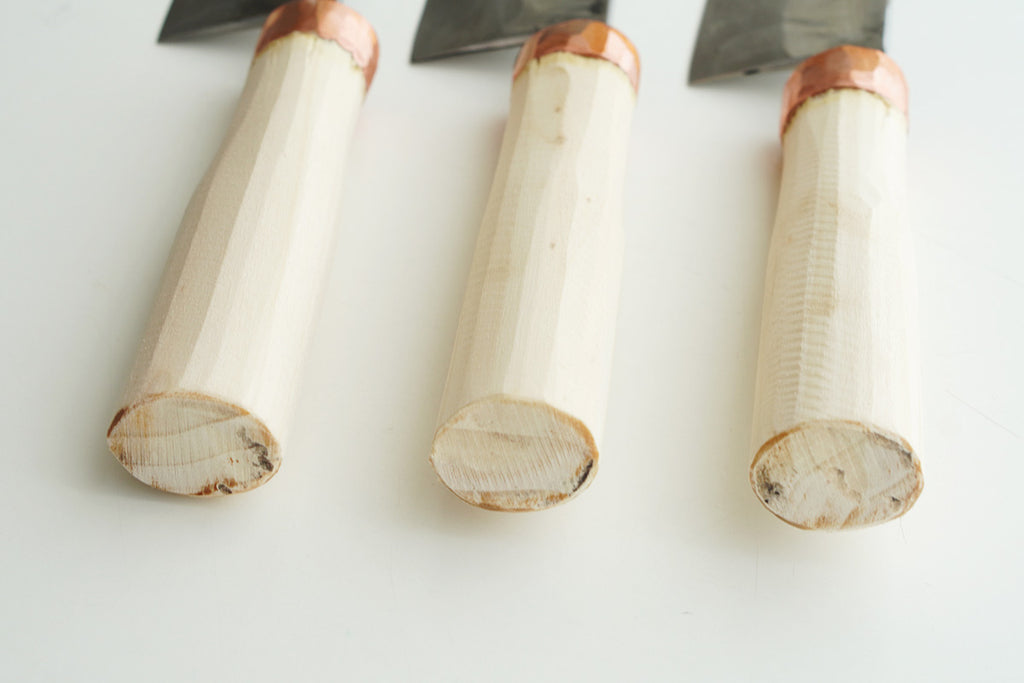
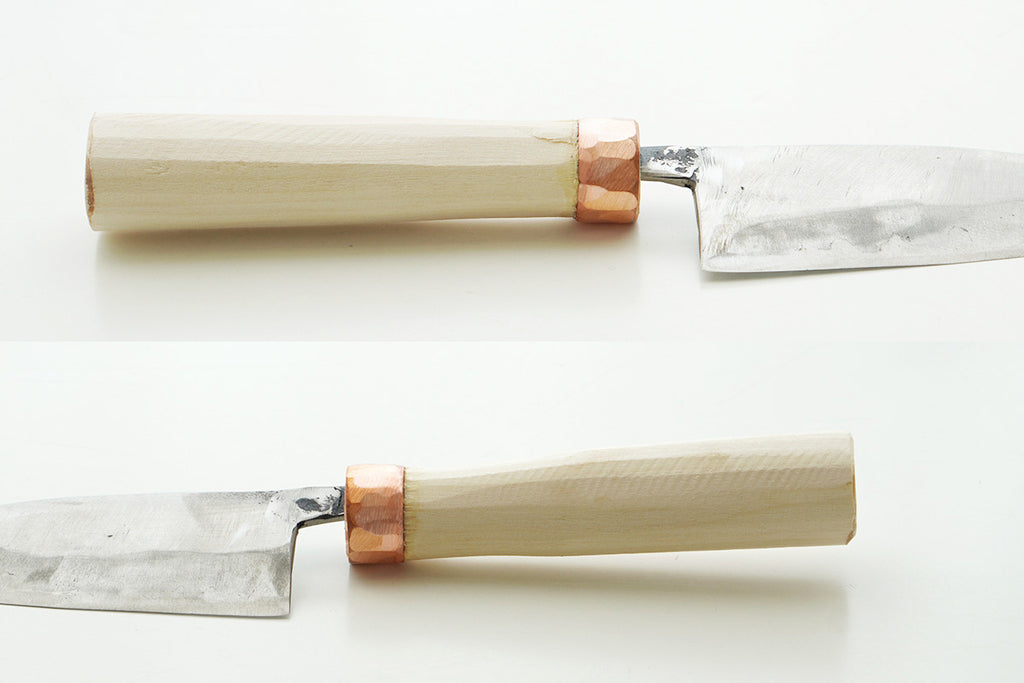
 The handle is made of hou wood, which is light and water-resistant, making it easy to handle.
 The blade is made with the "wakashi" technique, where steel and iron are layered and hammered together.
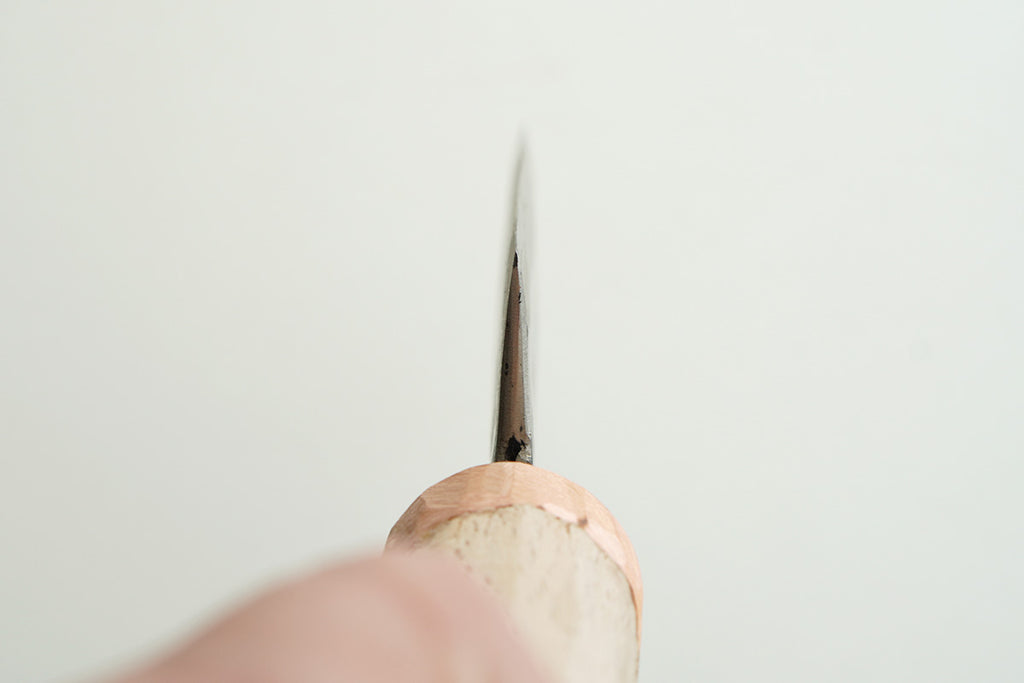
 Double-edged specification that can be used regardless of handedness.
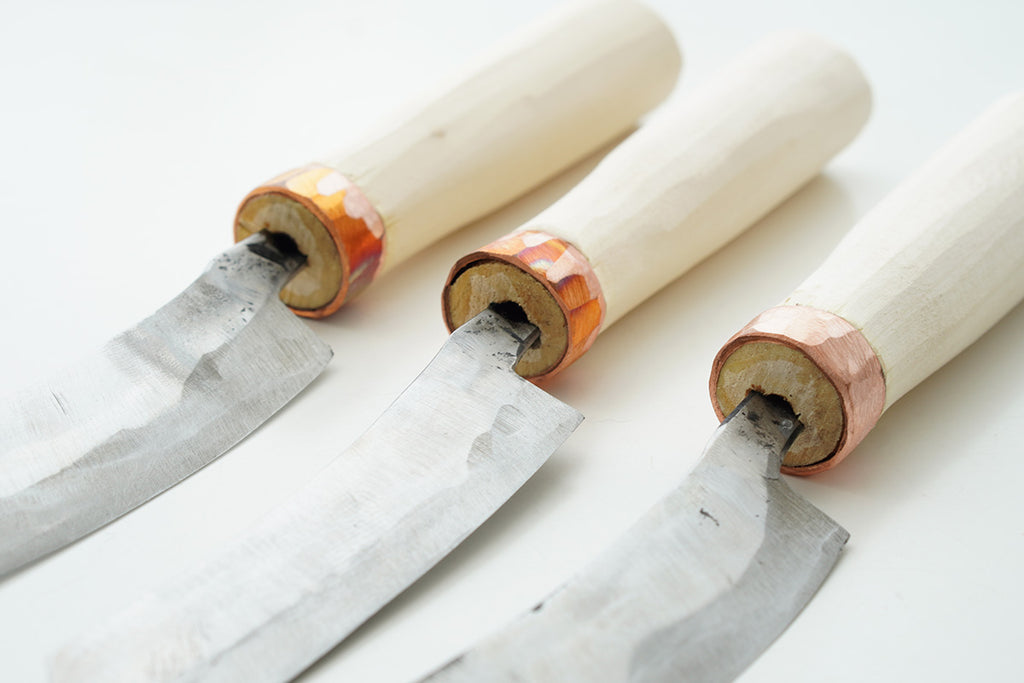
 The blade and handle are sturdy because the tang is inserted and then secured with high-strength, durable copper.
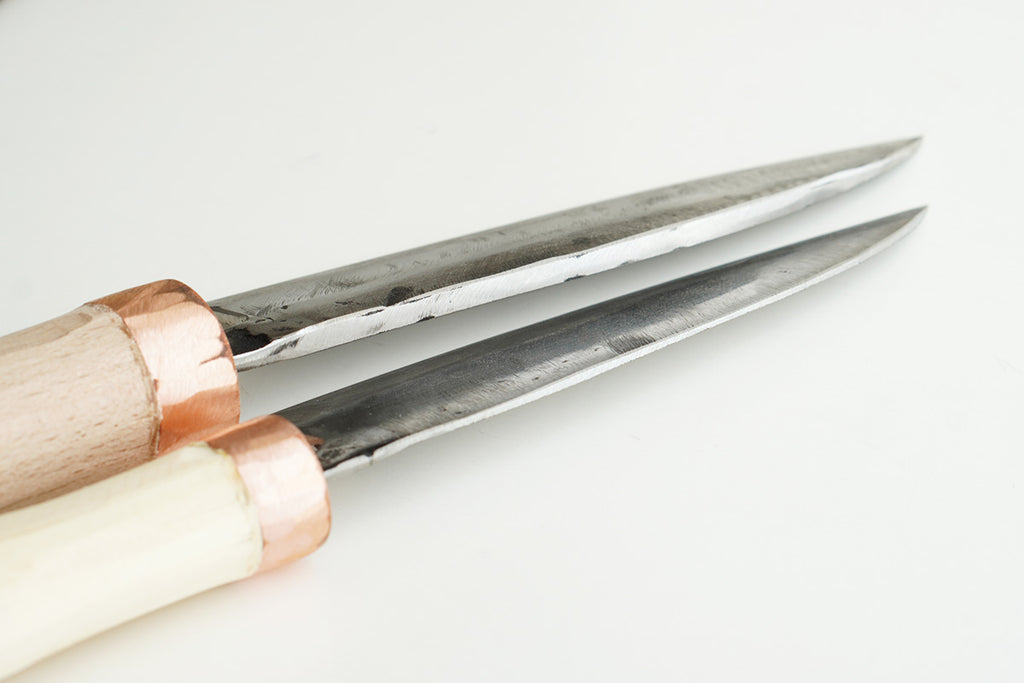
 The deba knife is shown at the top. It has a thick blade.
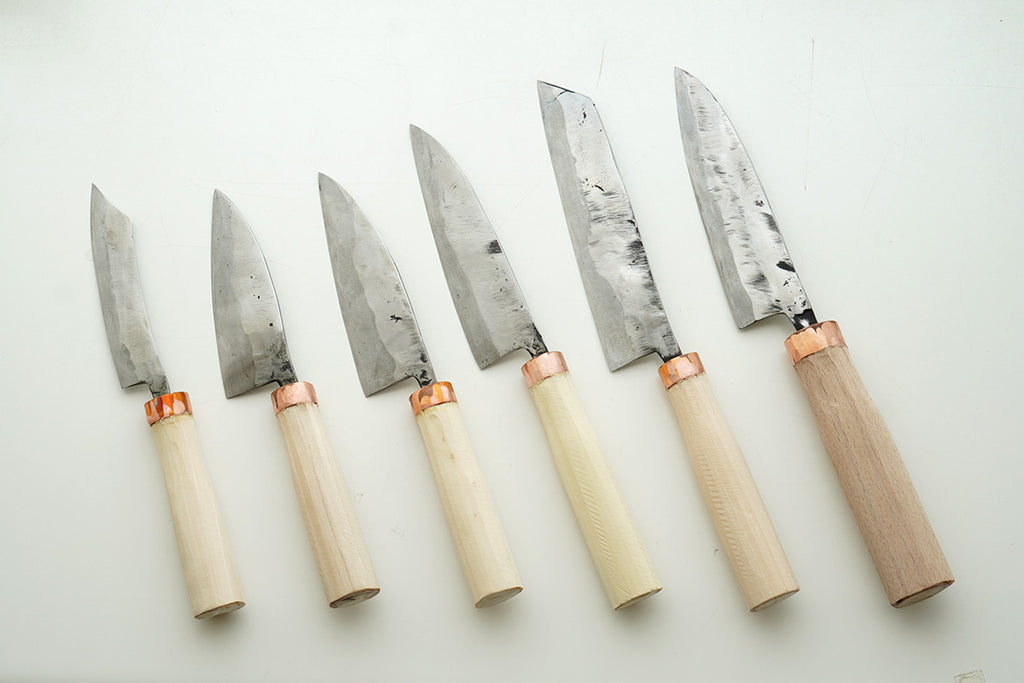
 From left: Paring knife, Santoku knife, Utility knife (small), Utility knife, Nakiri knife, Deba knife (medium)
Please be sure to confirm.
The following conditions are handled as good quality products by our store. We do not accept exchanges or returns, so please understand this before purchasing.※Knife sharpening and handle replacement are provided free of charge. (Shipping costs are borne by the customer)
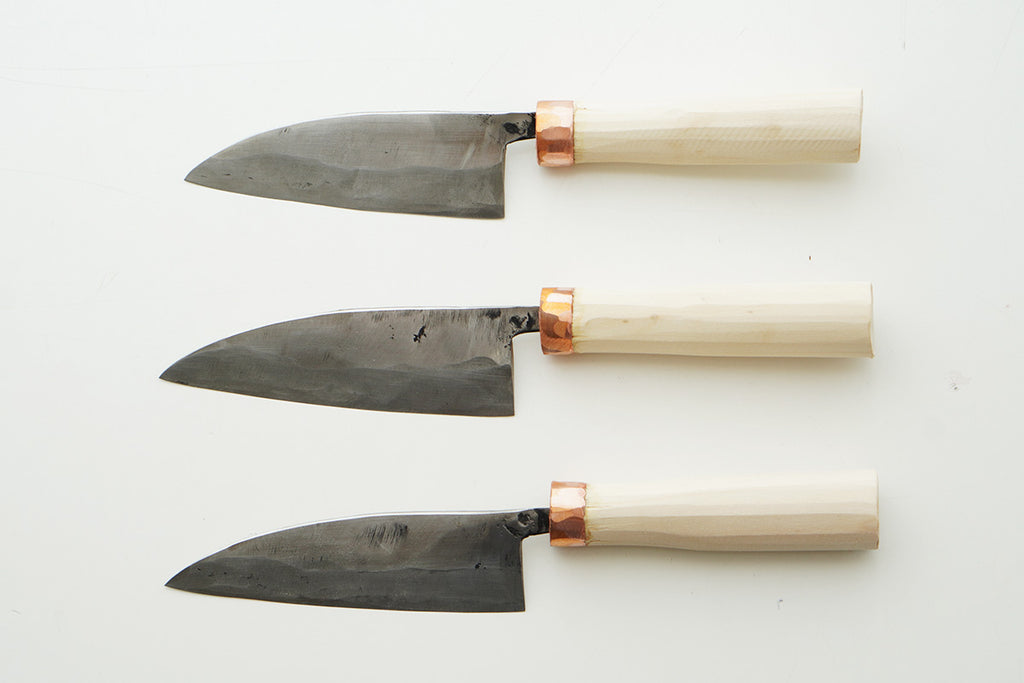
 Since each item is handmade, there are individual differences in size and shape. (Photo shows utility knife (small))
 The blade and handle insertion point may be off-center, or there may be gaps between the copper and the handle. Please understand this as a characteristic of handmade items. (Photo shows paring knife)
 Gaps or wood shavings may be visible at the joint between the copper and the handle. Please understand. (Photo shows utility knife (small))
 The end of the handle may be black. Please understand. (Photo shows utility knife (small))
 The handle may lift when placed down. (Photo shows utility knife (small))